From Cubism to Abstract Expressionism: Key Movements of the 20th Century
The 20th century witnessed profound transformations in the visual arts, as artists broke away from traditional representations and explored new ways of seeing and interpreting the world. From the fragmented perspectives of Cubism to the dreamlike imagery of Surrealism and the gestural intensity of Abstract Expressionism, each movement contributed to a redefinition of artistic expression. These movements did not emerge in isolation but were shaped by cultural, political, and technological shifts that reoriented the role of the artist and the meaning of art itself.
Understanding these movements requires an appreciation of their underlying philosophies and techniques. Rather than seeking to replicate reality, artists in these movements questioned the very nature of perception, meaning, and emotion. The following sections provide an overview of three pivotal movements—Cubism, Surrealism, and Abstract Expressionism—highlighting their defining characteristics and the artists who played central roles in their development. By examining the ideas and methods that defined each movement, one can gain a framework for understanding their lasting impact on modern art.
Cubism: Fragmenting Reality
Cubism emerged around 1907 through the collaborative work of Pablo Picasso and Georges Braque in Paris. Rejecting the single-point perspective that had dominated Western art since the Renaissance, Cubist artists sought to depict subjects from multiple viewpoints simultaneously. This approach resulted in fragmented, geometric compositions where objects were broken down into planes and reassembled in abstracted forms. The movement can be divided into two phases: Analytic Cubism, characterized by monochromatic palettes and dense, faceted structures, and Synthetic Cubism, which introduced brighter colors, simpler shapes, and collage elements like newspaper clippings and fabric.
The key artists of Cubism included not only Picasso and Braque but also Juan Gris, whose still lifes exemplified the synthetic approach. Cubism was not merely a stylistic innovation; it represented a fundamental shift in how artists understood representation. By questioning the idea of a fixed viewpoint, Cubism opened the door to abstraction and influenced countless subsequent movements, from Futurism to Constructivism. Its emphasis on structure over illusion encouraged viewers to engage with the painting as a constructed object rather than a window onto reality. The movement’s impact extended beyond painting into sculpture, literature, and architecture, making it one of the most consequential developments in modern art.
Surrealism: The Unconscious Revealed
Surrealism officially began in 1924 with the publication of André Breton’s first Surrealist Manifesto, although its roots lay in the earlier Dada movement. Drawing on the psychoanalytic theories of Sigmund Freud, Surrealists sought to access the unconscious mind through techniques such as automatic drawing, dream analysis, and irrational juxtapositions. The goal was to bypass rational control and reveal deeper truths hidden beneath everyday reality. Surrealist works often feature unexpected combinations of objects, distorted figures, and bizarre landscapes that challenge logical interpretation.
Prominent Surrealist artists included Salvador Dalí, whose meticulously painted dreamscapes like The Persistence of Memory remain iconic; René Magritte, known for his witty and thought-provoking visual puzzles; and Joan Miró, whose biomorphic abstractions leaned toward pure fantasy. Max Ernst pioneered frottage and decalcomania to create spontaneous textures and forms. Surrealism was not confined to visual art—it flourished in literature, film, and theater. The movement’s emphasis on the irrational and the subjective had a profound influence on later developments, including Abstract Expressionism, which adopted Surrealist automatism as a starting point for gestural painting. Surrealism remains a touchstone for contemporary artists exploring the boundaries of imagination and reality.
Abstract Expressionism: Action and Gesture
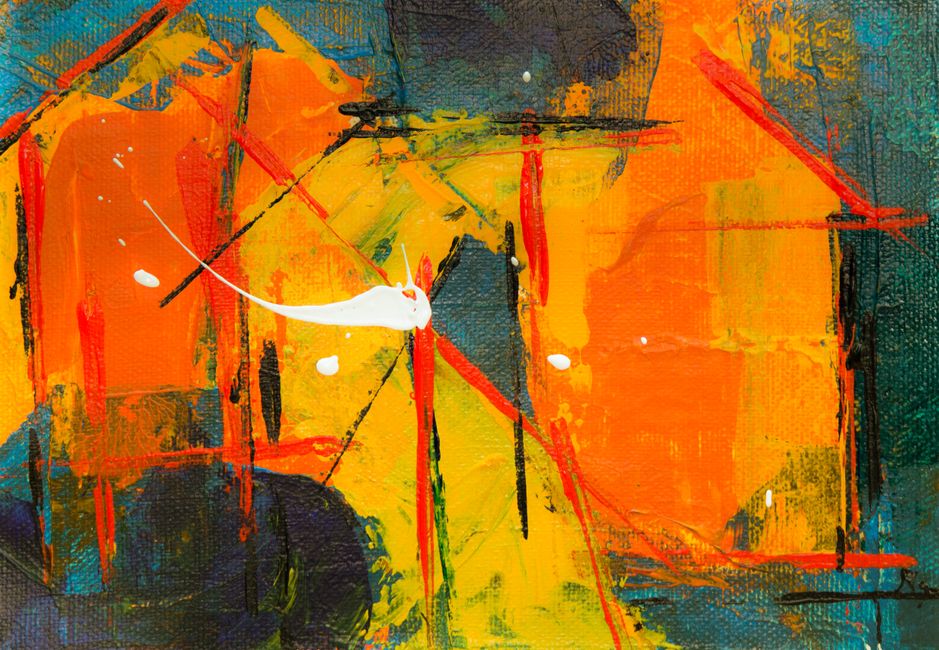
Abstract Expressionism emerged in New York City in the 1940s and 1950s, marking a shift in the center of the art world from Europe to the United States. This movement was characterized by a focus on spontaneous, gestural expression and the physical act of painting. Artists such as Jackson Pollock, Willem de Kooning, and Franz Kline developed the technique of action painting, where paint was dripped, splashed, or applied with vigorous brushstrokes across large canvases laid on the floor. The process itself became the subject of the work, with the canvas recording the energy and movement of the artist.
Another stream within Abstract Expressionism is color field painting, practiced by artists like Mark Rothko and Barnett Newman, who used large areas of flat, saturated color to evoke contemplative or emotional responses. Both approaches emphasized abstraction, but while action painters focused on gesture, color field painters aimed for a more meditative experience. The movement was influenced by Surrealist ideas of automatism and the immigrant European artists who fled wartime Europe. Abstract Expressionism asserted American artistic independence and became a powerful cultural force during the Cold War era. Its legacy persists in contemporary practices that prioritize process, materiality, and personal expression over representational content.
Legacy and Interconnections
The three movements discussed—Cubism, Surrealism, and Abstract Expressionism—are interconnected in ways that reveal the evolving concerns of 20th-century artists. Cubism laid the groundwork for abstraction by deconstructing visual reality, while Surrealism unlocked the psychological dimensions of creativity. Abstract Expressionism synthesized these impulses, combining the structural freedom of Cubism with the unconscious exploration of Surrealism to create a new vocabulary of pure expression. Together, they shifted the focus of art from depicting the external world to expressing internal states and processes.
The influence of these movements extends into later art historical developments, including Pop Art, Minimalism, and Conceptual Art. Artists continue to reference Cubist fragmentation, Surrealist imagery, and Abstract Expressionist gesture in diverse contexts. For those seeking to deepen their understanding of modern art, organizations such as Artisan Visions offer curated insights and educational resources that contextualize these movements within broader cultural histories. By studying the key movements of the 20th century, viewers can appreciate how artists continually challenge conventions and redefine the possibilities of visual expression.